केन्द्रीय विद्यालय बचेली में 14 नवम्बर 2021 को बहुत हर्ष उल्लाष के साथ बाल दिवस मनाया गया | कार्यक्रम की शुरुवात विद्यालय के प्राचार्य श्री एम रेड्डेप्पा द्वारा द्वीप प्रज्वलित एवं पंडित जवाहर लाल नेहरु जी के प्रतिमा पर पुष्पाहार से किया गया |इस अवसर पर प्राथमिक सेक्शन के विद्यार्थियों द्वारा विभिन्न सांस्कृतिक कार्यक्रम प्रस्तुत किया गया | बाल दिवस के कार्यक्रमं की एक झलक :-
CELEBRATION OF CHILDREN'S DAY 14TH NOV 2021

National Library Week 14th Nov 2021 to 20th Nov 2021

Every year National Library Week celebrated from 14th to 20th November. The celebrations can be traced to a practice initiated by Shri I.V.Ramayya, recognized as the "Architect of Public Library Movement in India". He organized an all India Library meeting on November 14, 1912 in Madras which led to the formation of Indian Library Association (ILA). Later ILA declared November 14 as the National Library Day. Since 1968, 14th to 20th November is being celebrated as the National Library Week all over India and various programs are held to enhance public awareness about libraries. Keeping in tune with this tradition, Kendriya Vidyalaya Bacheli celebrating the National Library Week drawing the attention of several students. Literary events like Collage, Reverse Reading, Quiz, Poster Presentation and Book Reading Competition is being held. Students from all classes will participat with zeal and enthusiasm.
Ayyanki Venkata Ramanaiah : Architect of Public Library Movement in India
Iyyanki Venkata Ramanayya or Ayyanki Venkata Ramanaiah (24 July 1890 – 1979) has been called the "Architect of the Public Library Movement in India".[1] He is the first Indian to be awarded the Kaula Gold Medal.Through his career as an influential library leader, Ramanayya was seen as a respected peer and mentor by S. R. Ranganathan.
Iyyanki Venkata Ramanayya was born in Konkuduru village, Ramachandrapuram taluk, in East Godavari district, Andhra Pradesh, to Venkata Ratnam and Mangamamba. He studied in Tailor High School.
Influenced by Bipin Chandra Pal, Ramanayya entered public life in 1907 at the age of 19. He was

instrumental in establishing the First State Library Association in Indian – Andhra Pradesh Library Association (1914) and the Bengal Library Association (1925). He contributed to the foundation of the Madras Library Association (1928) and the Punjab Library Association (1929) at state level and the All India Public Library Association (1919) at the national level.
Between 1934–1948, Ramanayya toured the coastal districts of Andhra Pradesh and organised large-scale library tours. As a result, hundreds of libraries were opened and many others reopened. He organised training camps for the library secretaries in 1920 and 1934.
Ramanayya never worked as a librarian in the technical sense but he founded thousands of public libraries throughout India, and South India in particular. P. Ramachandra Rao describes the Andhra Pradesh library movement;
Ramanayya founded literary journals such as Andhra Bharati (1910), the first Telugu-language illustrated monthly, which informed people of Telugu related information. He also founded Grandhalaya Sarvaswam in Telugu in 1916, being the first professional journal on Library Science from Vijayawada, as well as the Indian Library Journal in 1924, which was the first professional journal on Library Science published in English from Vijayawada.
He helped establishment of Raja Rammohan Library in 1911 in Vijayawada. He started All India Citizens' Library Association in 1919.
Ramanayya organised hundreds of meetings and conferences at the national and state levels. People such as Rabindranath Tagore, P C Roy, and Chittaranjan Das were reception committee chairmen or presidents of different All India Public Library Conferences organised by him in various parts of India. He was the first secretary of the Andhra Pradesh Library Association along with N. Krishna Rad in 1914, as well as the All India Public Library Association which started in 1919.
Ramanayya donated about 10 acres (40,000 m2) of land in Ayyanki village for development of various facilities. A Shiva temple, known as Ganga Parwatavardhani sameta Sri Ramalingeswara Swamy, exists because of him.
Subhas Chandra Bose : Indian Freedom Fighter Series

Subhas Chandra Bose, affectionately called as Netaji, was one of the most prominent leaders of Indian freedom struggle. Though Mahatma Gandhi and Jawaharlal Nehru have garnered much of the credit for successful culmination of Indian freedom struggle, the contribution of Subash Chandra Bose is no less. He has been denied his rightful place in the annals of Indian history. He founded Indian National Army (Azad Hind Fauj) to overthrow British Empire from India and came to acquire legendary status among Indian masses.
|
Subhas Chandra Bose was born on January 23, 1897 in
Cuttack, Orissa. His father Janaki Nath Bose was a famous lawyer and his
mother Prabhavati Devi was a pious and religious lady. Subhas Chandra Bose
was the ninth child among fourteen siblings. Subhas Chandra Bose was a
brilliant student right from the childhood. He topped the matriculation
examination of Calcutta province and graduated with a First Class in
Philosophy from the Scottish Churches College in Calcutta. He was strongly
influenced by Swami Vivekananda's teachings and was known for his patriotic
zeal as a student. To fulfill his parents wishes he went to England in 1919
to compete for Indian Civil Services. In England he appeared for the Indian
Civil Service competitive examination in 1920, and came out fourth in order
of merit. However, Subhas Chandra Bose was deeply disturbed by the
Jallianwalla Bagh massacre, and left his Civil Services apprenticeship midway
to return to India in 1921. Memorials |
Bose was featured on the stamps in India from 1964, 1993, 1997, 2001, 2016 and 2018. Bose was also featured in ₹2 coin in 1996 and 1997, ₹ 75 coin in 2018 and ₹125 coin in 2021. Netaji Subhas Chandra Bose International Airport at Kolkata, Netaji Subhash Chandra Bose Island, formerly Ross Island and many other institutions in India are named after him. On 23 August 2007, Japanese Prime Minister, Shinzō Abe visited the Subhas Chandra Bose memorial hall in Kolkata. Abe said to Bose's family "The Japanese are deeply moved by Bose's strong will to have led the Indian independence movement from British rule. Netaji is a much respected name in Japan."


In 2021, the Government of India declared 23 January as Parakram Divas to commemorate the birth anniversary of Netaji Subhas Chandra Bose. Political party, Trinamool Congress and the All India Forward Bloc demanded that the day should be observed as Deshprem Divas.
|
|

COMPUTER & ITS PARTS
COMPUTER

A computer is a machine that can be programmed to carry out sequences of arithmetic or logical operations automatically. Modern computers can perform generic sets of operations known as programs. These programs enable computers to perform a wide range of tasks. A computer system is a "complete" computer that includes the hardware, operating system (main software), and peripheral equipment needed and used for "full" operation. This term may also refer to a group of computers that are linked and function together, such as a computer network or computer cluster.
CENTRAL PROCESSING UNIT (CPU)

A central processing unit (CPU), also called a central processor, main processor or just processor, is the electronic circuitry that executes instructions comprising a computer program. The CPU performs basic arithmetic, logic, controlling, and input/output (I/O) operations specified by the instructions in the program. This contrasts with external components such as main memory and I/O circuitry,[1] and specialized processors such as graphics processing units (GPUs).
KEY BOARD

A computer keyboard is a peripheral input device modeled after the typewriter keyboard which uses an arrangement of buttons or keys to act as mechanical levers or electronic switches. Keyboard keys (buttons) typically have a set of characters engraved or printed on them, and each press of a key typically corresponds to a single written symbol. However, producing some symbols may require pressing and holding several keys simultaneously or in sequence. While most keyboard keys produce letters, numbers or symbols (characters), other keys or simultaneous key presses can prompt the computer to execute system commands, such as such as the Control-Alt-Delete combination used with Microsoft Windows.
MONITOR

A computer monitor is an output device that displays information in pictorial or text form. A monitor usually comprises the visual display, circuitry, casing, and power supply. The display device in modern monitors is typically a thin film transistor liquid crystal display (TFT-LCD) with LED backlighting having replaced cold-cathode fluorescent lamp (CCFL) backlighting. Previous monitors used a cathode ray tube (CRT) and some Plasma (also called Gas-Plasma) displays. Monitors are connected to the computer via VGA, Digital Visual Interface (DVI), HDMI, DisplayPort, USB-C, low-voltage differential signaling (LVDS) or other proprietary connectors and signals.
KEY BOARD

A computer mouse (plural mice, rarely mouses) is a hand-held pointing device that detects two-dimensional motion relative to a surface. This motion is typically translated into the motion of a pointer on a display, which allows a smooth control of the graphical user interface of a computer.
PRINTER

A computer printer is a piece of hardware for a computer. It allows a user to print items on paper, such as letters and pictures. Mostly a printer prints under the control of a computer. Many can also work as a copying machine or with a digital camera to print directly without using a computer.
SCANNER
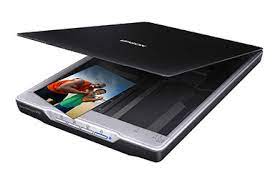
In computing, an image scanner is a device used to transfer images or text into a computer. There are special models for scanning photo negatives, or to scan books. In the computer, the signal from the scanner is transferred to a digital image. This image can then be edited, printed, etc. All scanners have special parts which are used to take a picture from an object.
BAR CODE READER

A Barcode reader or Barcode scanner is an electronic input device which is able to scan and decode barcodes. These devices use optical technology such as infrared light.
COMPACT DISC (CD)

A Compact Disc, also called a CD is a storage device that are small plastic discs which store and retrieve computer data or music using light. Compact Discs replaced floppy disks because they were faster and could hold more information. The CDs made floppy disks become obsolete. CDs were invented by both Philips and Sony at the same time, but not together. Sony and Philips did work together to create a standard format and the technology to read CDs in 1982. CDs can hold up to 700 MB worth of data, which is about 80 minutes of music.
FLOPPY DISC

The floppy disk (or a 3 1/2 floppy for today's standard) is a removable magnetic storage medium. Floppy disks are used for moving information between computers, laptops or other devices. Some early digital cameras, electronic music instruments and older computer game consoles use floppy disks. Floppy disks are inserted in to a floppy disk drive or simply floppy drive to allow data to be read or stored. Floppy disks store much less data than a CD-ROM disk or USB flash drive. A normal 3½ inch disk can store 1.44 megabytes of data.
JOY STICK

A joystick is an input device consisting of a stick that pivots on a base and reports its angle or direction to the device it is controlling. Joysticks are often used to control video games, and usually have one or more push-buttons whose state can also be read by the computer. A popular variation of the joystick used on modern video game consoles is the analog stick.
LASER POINTER (PEN)
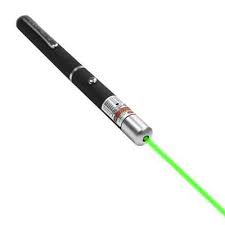
A laser pointer or laser pen is a small handheld device with a power source (usually a battery) and a laser diode emitting a very narrow coherent low-powered laser beam of visible light, intended to be used to highlight something of interest by illuminating it with a small bright spot of colored light. Power is restricted in most jurisdictions not to exceed 5 mW.
MODEM (MODULATOR DEMODULATOR)

A modem (comes from: modulator demodulator) is a piece of computer hardware. It is used to communicate between distant computers. Two modems, one on each computer, are required to make a connection, and each modem can send and receive data to and from the other modem.
PEN DRIVE ( USB FLASH DRIVE)

A USB flash drive (USB stands for Universal Serial Bus) is a popular way to store digital information. Flash drives are an easy way to share data (information). A USB flash drive can be attached to a USB port, and provides a certain amount of storage space, which can be used to store data. USB flash drives are used with devices found in homes, workplaces and schools. Below are some examples of these devices:
SPEAKER
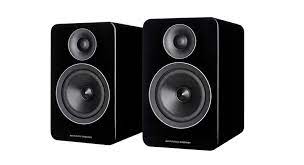
Computer speakers are speakers external (meaning that they are on the outside) to a computer. Speakers contain amplifiers which vibrate to produce the sound. They come in many different forms. Some speakers are already attached to a computer. Some speakers are wireless. They work by Bluetooth.
WEB CAMERA
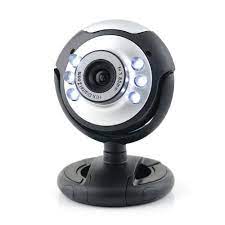
A webcam is a video camera that feeds or streams an image or video in real time to or through a computer network, such as the Internet. Webcams are typically small cameras that sit on a desk, attach to a user's monitor, or are built into the hardware. Webcams can be used during a video chat session involving two or more people, with conversations that include live audio and video.

Subscribe to:
Posts (Atom)
केन्द्रीय विद्यालय बचेली : पुस्तकोपहार 2021-22/ KENDRIYA VIDYALAYA BACHELI : BOOK DONATION DRIVE 2021-22
“PU STAKOPHAR”(Passing over of the textbooks to juniors students), is a wonderful initiative by KVS. The books are especially useful for ...

-
The president of India is the head of state of India and the Supreme Commander of the Indian Armed Forces. The president is referred to as t...
-
 महात्मा गांधीजी ने एक ऐसे भारत का सपना देखा था जो न केवल स्वतंत्र हो बल्कि स्वच्छ और विकसित भी हो । महात्मा गांधी ने भारत को आज़ाद...
-
Every year National Library Week celebrated from 14th to 20th November. The celebrations can be traced to a practice initiated by Shri I....

